
Finding Kalamazoo Township Residents
There is no single public roster for every Kalamazoo Township household. The useful records are organized by a role: owner, voter, party to a recorded document, court party, decedent, or historical directory occupant. Match the source to the question. A current street address belongs first in the parcel search. A former homeowner belongs in the deed index. An old family can appear in the printed directory shelf, the Gazette, probate files, or census work. Keeping those roles separate prevents a searcher from calling an owner an occupant or a court party a current resident.
Start small and make a dated note for every result. Record the exact indexed name, parcel identifier, jurisdiction, and source. A second independent signal, such as the same middle initial, spouse, legal description, or dated address, is much safer than a shared surname. Kalamazoo Township sits beside the City of Kalamazoo, Parchment, and other local units, so the postal city alone is not enough.
- Search a current address or surname in the county Parcel Search and note the parcel ID and local unit.
- Use the County Parcel Viewer to check the map position and jurisdiction.
- Search the owner or parcel in Kalamazoo County Deeds Search for a dated instrument trail.
- For a past household, ask KPL Local History staff for the city, rural, or criss-cross directory that fits the address and era.
- Use a focused request, court file, or archive only when the online index cannot answer the precise question.
Note: A record can document a role on a stated date without proving every person who was physically present at an address.
For Kalamazoo Township, label a parcel result as Kalamazoo Township ownership evidence, a directory entry as Kalamazoo Township historical evidence, and a court result as a separate Kalamazoo Township record role.
Kalamazoo Township Resident Records Offices
The county holds the most useful land, court, and vital-record indexes, while Kalamazoo Township keeps its own clerk, assessing, and municipal files. The township contracts building permits and inspections through the Kalamazoo Area Building Authority. The library is the local historical gateway. These offices answer different parts of a resident-record question, and each offers a fallback when a portal does not show enough detail.
Kalamazoo County Clerk/Register of Deeds
201 W. Kalamazoo Ave.
Kalamazoo, MI 49007
269-383-8970
Document Searches and workstations
Kalamazoo Charter Township Assessing
1720 Riverview Drive
Kalamazoo, MI 49004
269-381-8083 ext. 118
County Parcel Search
Kalamazoo Township Clerk and Elections
1720 Riverview Drive
Kalamazoo, MI 49004
269-381-8080
Michigan Voter Information Center
Kalamazoo Public Library Local History
315 S. Rose Street, second floor
Kalamazoo, MI 49007
269-553-7808
Local History Collection
A Kalamazoo Township request belongs with the Kalamazoo Township office or county custodian that created it. Kalamazoo Township building files follow the KABA route, while Kalamazoo Township land records follow the county route.
Kalamazoo Township Jurisdiction Before ZIP
A Kalamazoo mailing label is not a municipal boundary. Township, city, and nearby local-unit properties can share postal names and ZIP codes. Before using any property, directory, or voter result, compare the parcel jurisdiction, township boundary layer, street location, and legal description. This small check matters most around city edges and older records, where a directory entry may name Kalamazoo without saying whether the property lay in the township or in land later annexed by the city.
The county GIS viewer is a good routing tool, not a final statement of ownership. Its layers bring together data from many public sources and may contain errors. Use it to find the parcel and adjoining boundaries, then return to the assessor or Register of Deeds for the authoritative record. The same rule keeps an old address from being assigned to the wrong local unit.
For Kalamazoo Township parcels near a boundary, keep the Kalamazoo Township jurisdiction note beside the map result. That discipline distinguishes a Kalamazoo Township parcel from a nearby postal match.
Kalamazoo Township Parcel Search Fields
The county’s free parcel interface offers three practical ways into the current property roll. Owner search accepts a partial name in a LastName FirstName MiddleInitial pattern. Parcel ID accepts full numbers or leading portions with hyphens, spaces, or no punctuation. Street search accepts any part of an address, and a street name can return the matching street. When spelling is uncertain, the county recommends trying the number alone.
| Search route | Entry format | Useful result | Limit to remember |
|---|---|---|---|
| Owner | Partial LastName FirstName MiddleInitial | Parcels tied to the indexed owner | Owner is not automatically the occupant |
| Parcel ID | 04-12-448-020, spaces, or no punctuation | One parcel or a prefix group | Current county data is updated annually |
| Street | StreetNumber StreetName, or street name | Matching parcels along a street | Confirm the local unit before drawing conclusions |
- Parcel
- A local government identifier for a tract of land.
- Situs address
- The physical location of the parcel or building.
- Mailing address
- The tax-notice destination, which may be elsewhere.
- Index
- A searchable finding aid that may point to, but is not always, the full record image.
A parcel card may place both a situs address and an owner mailing address in view. Keep them separate. The situs identifies the property. The mailing address can be a post-office box, agent, or another home, so it is a lead for further checking rather than proof that a person lives at the parcel.
A Kalamazoo Township situs is the location to map. A Kalamazoo Township mailing address can still be elsewhere, and a Kalamazoo Township parcel must be confirmed with its own identifier.
Current Kalamazoo Township Resident Directories
Current directory-like records are fragmentary by design. A property roll lists owners and parcels. A voter record is an election record with protected fields removed. A deed index lists parties to a property instrument. Court records attach people to a case, not a home. Each source can be useful when read for the role it actually records.
| Record trail | What it can confirm | Keeper | Access channel |
|---|---|---|---|
| Parcel roll | Owner, parcel, situs, assessed and taxable values | County Equalization and local assessor | Free county search, local assessor for current detail |
| Recorded documents | Grantor, grantee, date, document and legal description | Clerk/Register of Deeds | Free index, paid images, public workstation |
| Voter registration | Public registration fields and election status | SOS and township clerk | Personal lookup or scoped QVF request |
| Probate index | Decedent, fiduciary, heir and estate relationships | Kalamazoo Probate Court | Online index, office file access, microfilm |
| Local directories | Historical address, occupation, spouse, telephone or household clues | KPL Local History | Library volumes, microfilm, and digital citations |
To verify one name across those roles, use the Kalamazoo Township resident lookup route rather than treating a single database result as a full identity match.
The records listed for Kalamazoo Township use different dates and different roles. A Kalamazoo Township name match becomes useful only when a second Kalamazoo Township record supports it.
Kalamazoo Township Voter Record Limits
The Michigan Voter Information Center is designed for a voter to review that voter’s registration, polling place, sample ballot, districts, ballot status, and clerk information. It is not a public browse tool for a whole street. Michigan voter-registration records are public under FOIA, but a full list should be requested through the appropriate QVF process and narrowly scoped to the jurisdiction, precinct, or other necessary area.
Public QVF output can include name, residential and mailing address when available, year of birth, registration date, status, voter ID, and requested voting history. Month and day of birth, driver-license or state-ID numbers, phone, email, digitized signature, last four Social Security digits, and certain office records are withheld. The Address Confidentiality Program protects eligible participants through a substitute address. Voting history shows participation, never ballot choices.
A Michigan Voter Information Center screen is useful for its stated personal purpose. A broader request uses the state’s QVF FOIA form, which accepts a jurisdiction scope and delivery choice. Electronic files are not emailed under the described form process.
Kalamazoo Township election administration begins with the Kalamazoo Township clerk. A Kalamazoo Township voter request must respect protected fields, and a Kalamazoo Township status does not establish physical presence on a particular day.
Kalamazoo Township Names in MiCOURT
MiCOURT can corroborate a name through a case number, case type, category, status, dates, and other official filters. A case hit is not a residence statement. It needs a second signal, such as a middle initial, case date, relative, parcel, or court county. Some case types are excluded, sealed records do not appear, and the public display has limits for older criminal conviction information.
For a Kalamazoo Township person, the county’s 8th District Court, 9th Circuit Court, and Probate Court are the local custody points. If the index does not show enough information, ask the court how to request the identified file or copy. Probate is especially useful for estate relationships: the online index is 1995 to current with active older cases, while earlier material has office, paper, and microfilm paths.
MiCOURT Case Search displays the public index surface used for this check. A name hit should be read as a lead, then confirmed with the record custodian.
Michigan OTIS is a separate state corrections locator with name, MDOC number, and status options. It is a narrow official resource and should never be treated as a general directory or a current-address guarantee.
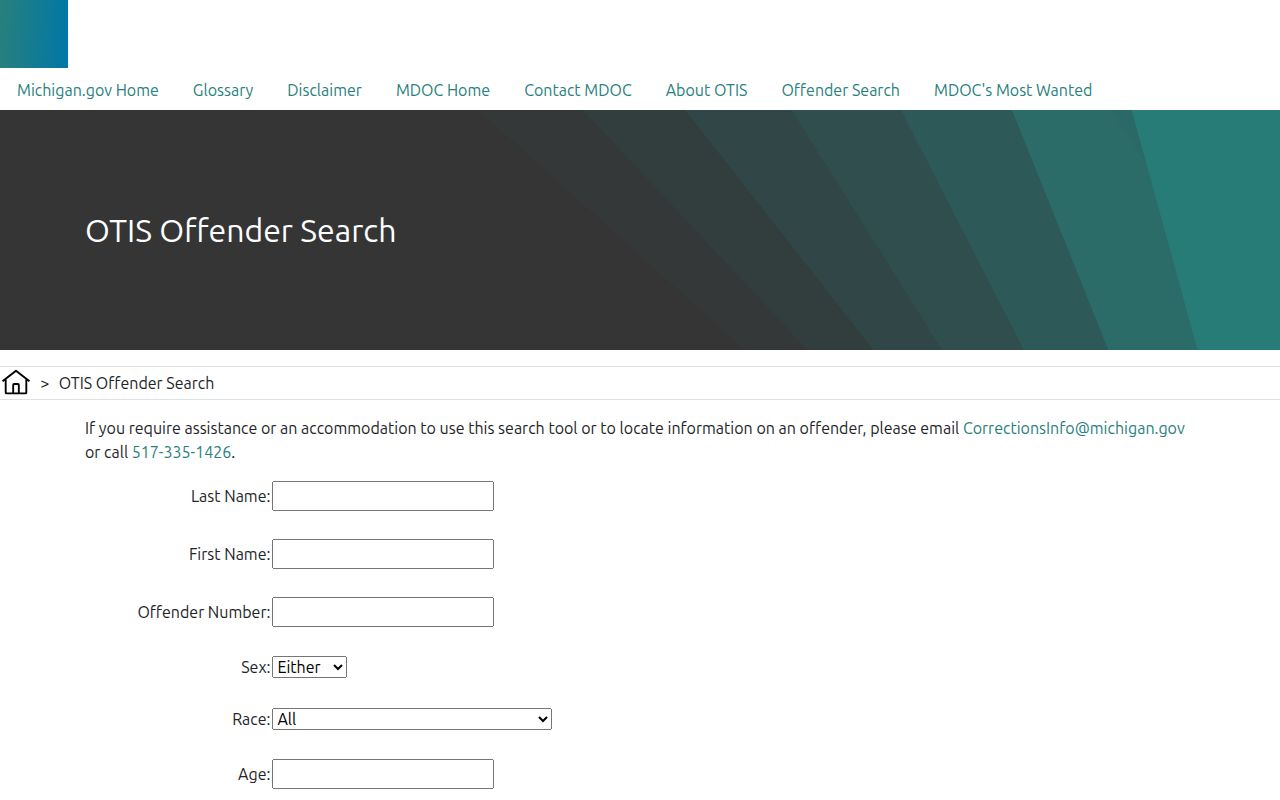
The OTIS search screen illustrates the distinct fields and status context that should be checked before assuming two similar names identify one person.
Kalamazoo Township court research should record the Kalamazoo Township connection separately from the case record. A Kalamazoo Township address may help distinguish names, but a Kalamazoo Township conclusion requires corroboration.
Kalamazoo Township Records and Personal Safety
Use public records for lawful personal research, family history, estate questions, civic transparency, and property curiosity. Do not use any record trail to stalk, harass, intimidate, or harm a person. Confidential programs, sealed files, protected voter information, and restricted vital records are not gaps to work around. They are legal protections that must be respected.
Privacy limit. A substitute address through Michigan’s Address Confidentiality Program can protect an eligible participant in government systems, including voter-registration administration.
The Michigan Address Confidentiality Program explains its eligibility and application-assistant process. If a record may be incomplete or restricted, contact the office that holds it for procedural guidance rather than seeking a workaround.
Kalamazoo Township research never overrides a protected Kalamazoo Township address. A Kalamazoo Township result that is restricted should remain restricted.
Kalamazoo Township Deed Index Trail
The Register of Deeds is the strongest address-history source once a parcel and current owner are known. Its Deeds Search offers Name, Date Range, Liber/Page, Document Number, and Parcel Number paths. The Register advises a name-first approach because a street address is not required when a document is recorded. Match grantor, grantee, recording date, document type, parcel, and legal description rather than relying on an address field alone.
Land-record images reach back to 1831, while the Register identifies the complete index as reaching through 1984. The free index and free public workstation make a good first pass. Images cost $1 per page plus a $2.50 technology fee online; the workstation charges $1 per printed page. Tapestry EON is a $8.75 casual web search option, while Laredo is a monthly service for regular users. Staff can locate the latest deed for $5 per property before page charges.
The Register of Deeds also offers a free Property Fraud Alert for a name-match notification after recording. It does not replace a title search or prevent a filing, but it gives an owner a notice channel.
Kalamazoo County’s FOIA page routes requests and lists its records paths. Michigan FOIA ordinarily calls for a response within five business days, with one written ten-business-day extension, when a request sufficiently describes the records sought.
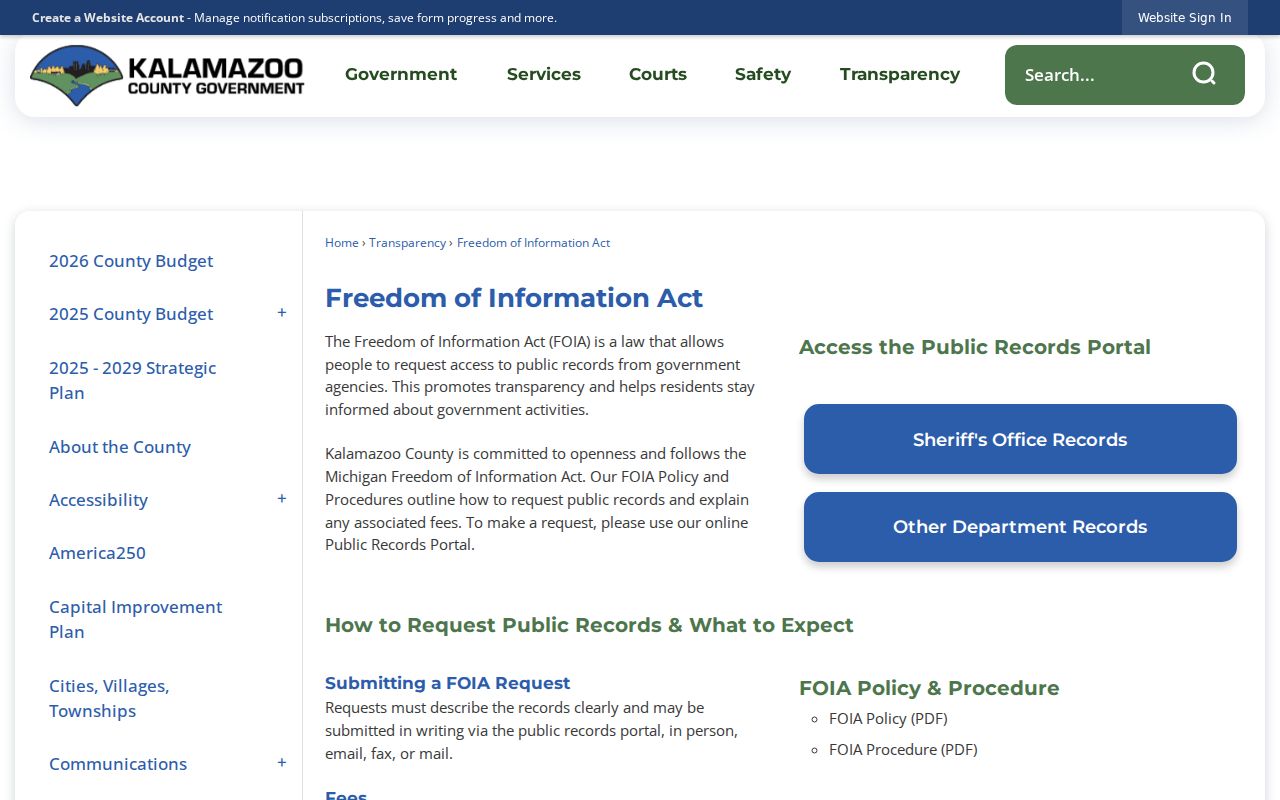
The county portal is a fallback when an existing record is not exposed by a public index, not a request to create a new resident list.
Note: A focused request with names, date range, parcel or precinct, record type, and preferred format can limit unnecessary search and review work.
A Kalamazoo Township deed chain follows a Kalamazoo Township parcel and legal description. Kalamazoo Township address text alone can be incomplete, so the Kalamazoo Township parcel number is the better bridge.
Historical Kalamazoo Township Resident Directories
Kalamazoo Public Library’s Local History Collection holds all published Kalamazoo city directories from 1860, although the series was irregular. The shelf also includes sparse county listings, suburban directories from 1966 through 1976, rural directories, telephone books, and criss-cross volumes. The oldest criss-cross directory is from 1954, making it an address-first resource when the person’s name is unknown.
City directories do not reliably cover every rural township household. County and suburban volumes, the Rural Directory of Kalamazoo County, telephone books, maps, and newspapers can fill part of the gap. A historical entry may record a spouse, occupation, business, address, or a boarder note, but it is an observation from that edition, not proof of every household member or a current status.
For volume-by-volume holdings, call numbers, and entry-reading advice, use the Kalamazoo Township city directories collection. KPL’s directory holdings page gives the local research rules behind that shelf.
The Michigan Attorney General’s FOIA guidance explains the statewide request framework for the image below.
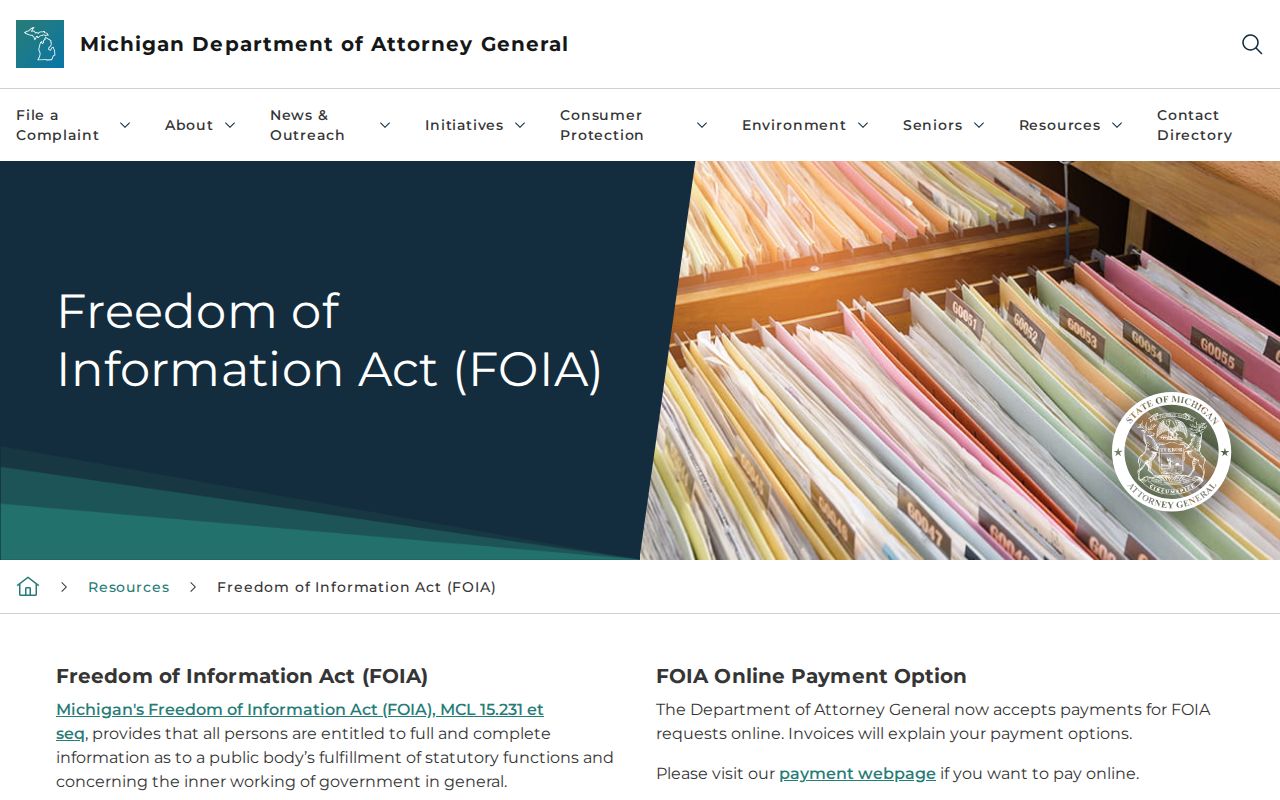
The Michigan Attorney General’s FOIA guidance helps distinguish an existing public record request from a request for a newly compiled directory.
Kalamazoo Township historical work may begin in a Kalamazoo directory but should preserve the Kalamazoo Township jurisdiction question. A Kalamazoo Township household can require a rural or suburban volume instead.
Kalamazoo Township Gazette and Probate Leads
The historical trail often needs more than a directory. KPL has an almost complete Kalamazoo Gazette microfilm run from 1834 to the present, and its clipping files are strongest from 1928 through 1968. The Local Information Database indexes local newspapers, magazines, photographs, and other resources. An obituary, removal notice, marriage notice, or property item can provide a date and relationship that connects an ambiguous directory entry to the correct household.
Probate records begin in 1832. The Kalamazoo Probate Court has an online index from 1995 to current plus active older matters, no online images, microfilm from 1832 through 1990, and paper files for 1990 through 1995. For heir research, confirm a decedent with an obituary or death record, then request the case material through the court while respecting protected identifying information.
KPL Local History Online connects digital collections and the Local Information Database. Its archival shelf remains essential when an index lacks a downloadable record image.
Kalamazoo Township family research can connect a Kalamazoo Township obituary clue to a probate file or directory year. Each Kalamazoo Township source should retain its own publication or filing date.
Kalamazoo Township Address Changes and New Indexing
Historical address work has two local traps. Kalamazoo adopted a Philadelphia-style numbering system in 1883, then underwent a city-wide renumbering in 1925. There was no 1925 directory, so compare the 1924 and 1926 volumes and consult the 1932 Sanborn atlas, which carries old and new number clues. Street-name changes and annexation can add another mismatch. Miller Road, for example, becomes ML Avenue outside the City of Kalamazoo.
The deed trail has been growing more accessible without becoming complete in one step. A 2024 ARPA-funded county project scanned more than 1.5 million land documents and index books dating to 1831. The 2025 report later described about 87,000 documents handled through enhanced indexing and 32,000 historical documents indexed by staff. Those improvements do not erase the stated 1984 complete-index boundary, so preserve the source coverage note with each find.
The county digitization announcement describes the preservation project. For eligible recordings, the county also added Consumer E-Recording in 2025, but deeds transferring ownership remain outside that individual filing path.
Michigan LARA’s license search can verify a stated professional or business status, not a person’s current home. Its category selector is shown in the official interface below.
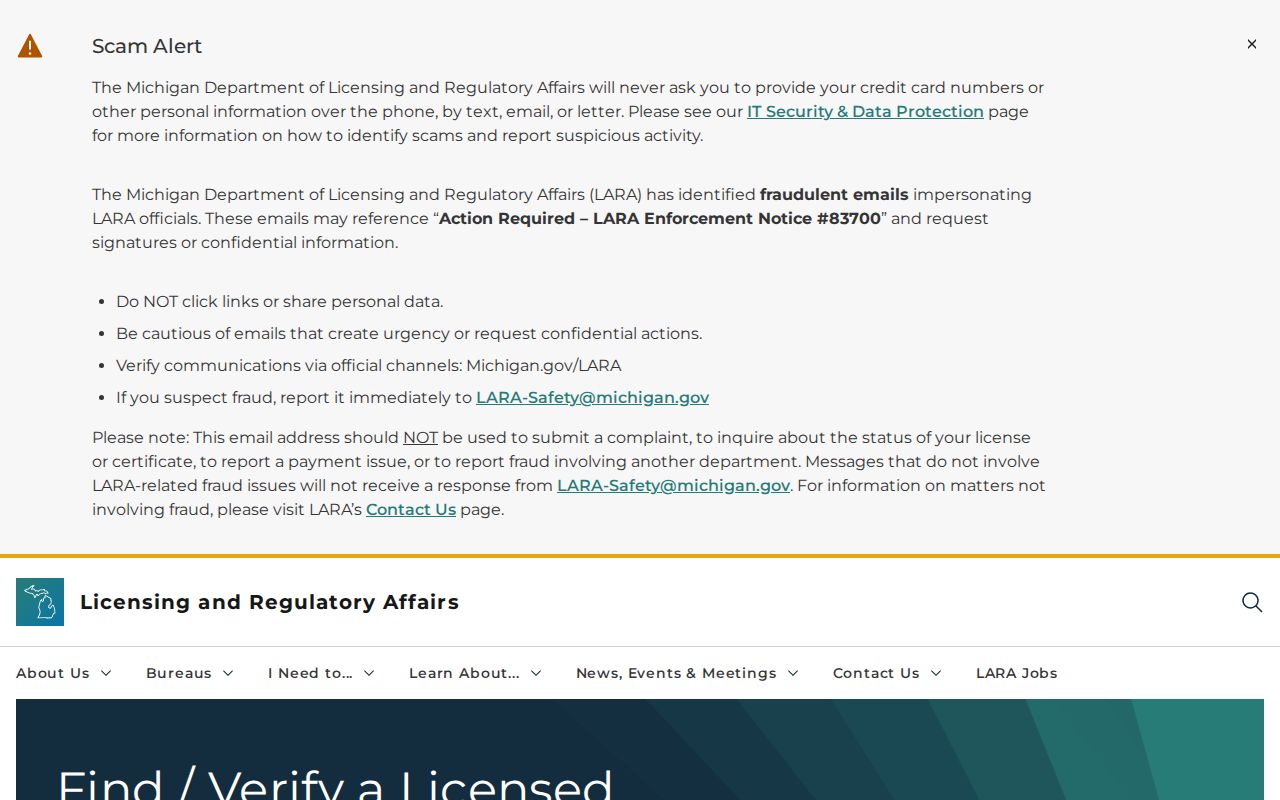
The category screen is useful when the question concerns a publicly listed license status, which should stay separate from a residence conclusion.
Michigan’s public registry search is another limited state resource, with name, address, city, county, ZIP, and radius routes for its stated public-safety purpose only.
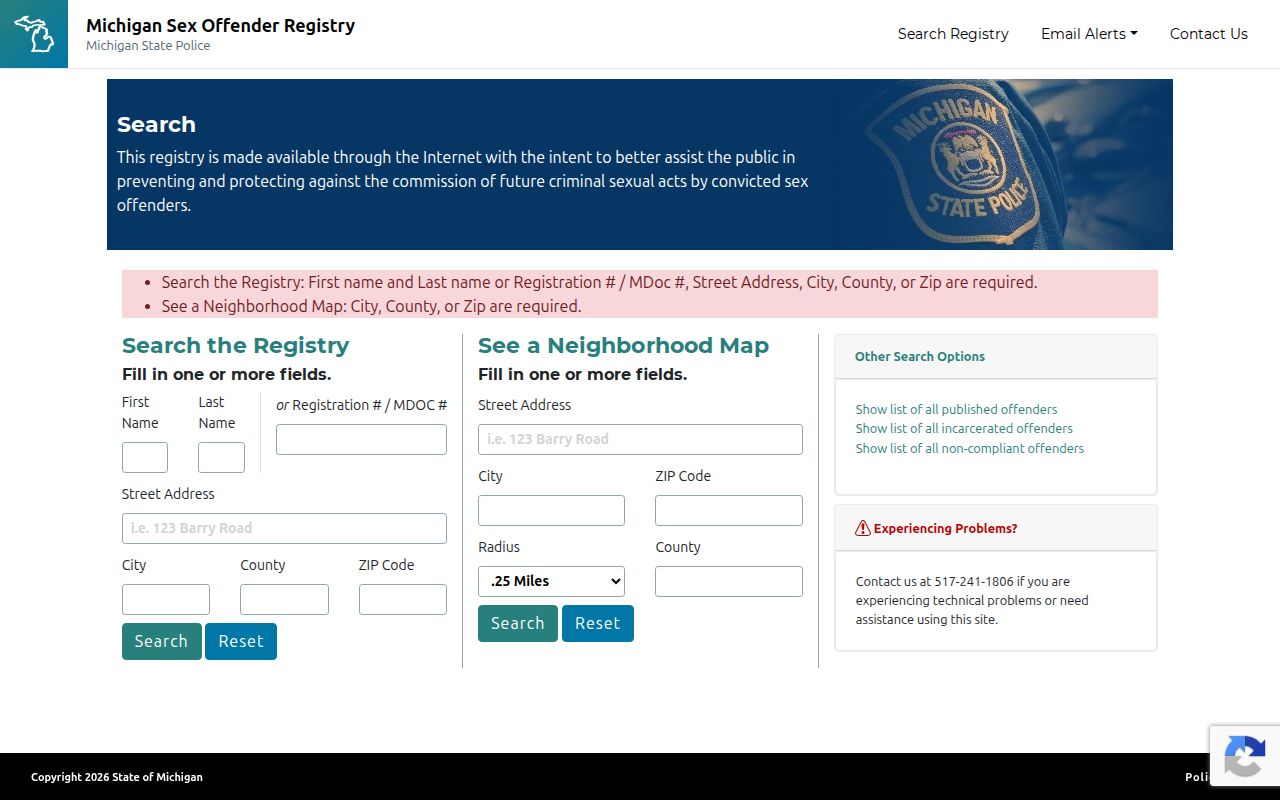
The official registry’s radius options and separate record scope show why a specialized safety resource should never stand in for a general resident directory.
Kalamazoo Township historic numbers need a Kalamazoo Township map and directory comparison. A Kalamazoo Township search that spans 1925 should test both the older and later address forms.